How Strong Should Your CBD Actually Be? A 2026 UK Strength Check
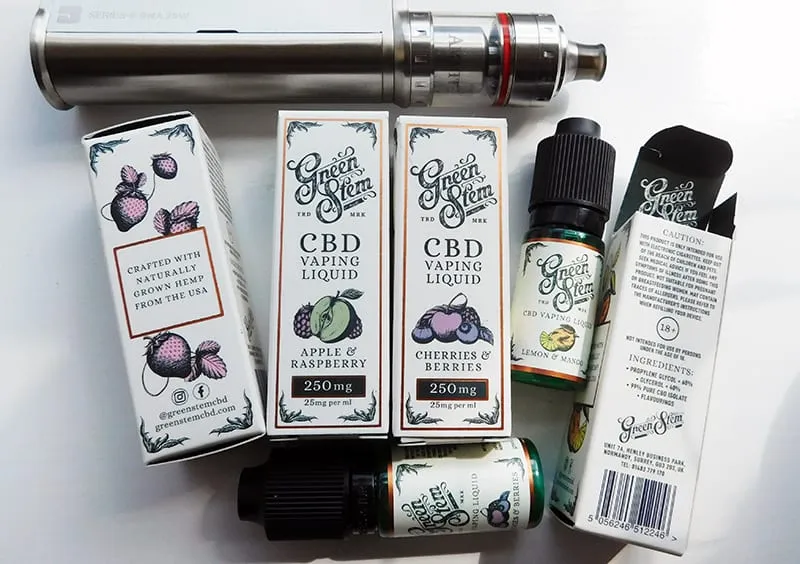
Photo: Ecig Click, CC BY-SA 2.0, via Wikimedia Commons
Strength labels are maths, not magic
Walk into any UK CBD stockist and you will see the same quiet arms race: 5%, 10%, 20%, 30%, and the occasional bottle that seems to be competing for a bodybuilding title. It is tempting to assume the bigger number is the better product. It is not. A strength label is mostly a maths statement about concentration, not a promise about how you will feel.
Here is the bit worth tattooing to the inside of your wallet: a 10ml bottle at 5% contains roughly 500mg of CBD. At 10%, it is about 1,000mg. At 20%, around 2,000mg. At 30%, about 3,000mg. The percentage tells you how much CBD is packed into each millilitre. It does not tell you how well it was made, how it suits your routine, or whether you need that much in the first place.
That is why the useful question is not 'what is the strongest CBD oil?' It is 'what strength fits the way I actually use it?'
The ladder in practical terms
Think of the UK CBD strength ladder less like a scoreboard and more like a set of tools.
5% — the gentle starter. Around 50mg per ml. This is the bottle to look at if you are new, cautious, or simply want a small, repeatable dose. It is also handy for people who like to fine-tune in small steps rather than leaping from one big number to another.
10% — the everyday middle. Around 100mg per ml. This is where many regular UK users settle because it offers a useful balance of dose flexibility and value. You can take a small amount without wrestling with a tiny fraction of a drop, and you are not paying premium high-strength prices for a routine that does not need them.
20% — the committed bottle. Around 200mg per ml. This suits people who have already worked out a routine, know roughly how much CBD they use, and want fewer drops or better value per mg. It is not automatically a 'next step' just because it exists.
High strength — the specialist shelf. Anything from 30% upwards needs a cooler head. The price per bottle can look alarming, but the number that matters is value per mg. Divide the bottle price by the total milligrams. A £60 bottle with 3,000mg is cheaper per mg than a £25 bottle with 500mg — but only if you actually use it sensibly and do not treat it like a supersized soft drink.
Why more mg does not equal more calm
CBD is not a volume knob. Doubling your milligrams does not reliably double the effect, and it certainly does not guarantee a better experience. Some people find a modest dose fits neatly into their day. Others prefer a higher concentration because it means fewer drops and a lower cost per milligram. Neither is heroic. Neither is wrong.
The trap is assuming that if a little feels subtle, a lot will feel obvious. That is how people end up with an expensive bottle, an unsettled routine, and no clear idea what changed. A better approach is to keep one variable steady: same product, same time, same rough dose, same notes for a couple of weeks. Then you have something to judge.
A simple switch framework
Before moving up a rung, run through this checklist.
1. Have you given the current strength a fair run? A few days is not a fair run. Two to four weeks of consistent use, with a simple note on timing and dose, gives you far more useful information.
2. Are you actually measuring? Drops are not a personality trait. Use the pipette markings, count properly, and write it down. If you cannot say roughly how many milligrams you took, you are guessing.
3. Is the issue strength — or timing? A bottle taken at the wrong moment can feel like the wrong bottle. If you are using CBD in the evening and expecting daytime sharpness, that is a scheduling problem, not a strength problem.
4. Is the cost per mg sane? A stronger bottle can be better value, but only if the product is transparent about total CBD content. If the label shouts 'high strength' without a clear milligram figure, walk on.
5. Are you chasing a feeling that was never promised? CBD is not a medicine and should not be treated as a treatment for a condition. If you are using it to manage a health issue, speak to a qualified healthcare professional. A stronger bottle is not a substitute for proper advice.
When staying put is the flex
If your current bottle fits your routine, your budget and your expectations, stay there. Genuinely. The most expensive mistake in the CBD aisle is not buying a weak product. It is constantly switching products before you have learned how the last one behaved.
Staying put also makes financial sense. A 10% bottle used consistently can be better value than a 30% bottle used erratically. And a product you understand is more useful than a product you are frightened to use.
Red flags in UK product claims
UK CBD is a crowded market, and some labels are more enthusiastic than accurate. Watch for these.
- No total mg figure. A percentage alone is not enough. You want to know how much CBD is in the bottle.
- Vague 'full spectrum' claims with no batch information. Full spectrum can be a useful category, but it should come with clear labelling and traceability.
- Miracle language. CBD is not a cure-all. Claims that it treats, prevents or fixes specific conditions are a reason to be sceptical.
- No batch or lab information. A serious UK brand should be comfortable talking about testing and product documentation.
- Novel Food confusion. CBD products in the UK sit within Novel Food rules. A brand that cannot explain its compliance position is not one to trust with your routine.
The walk-away list
Walk away from anything that promises a transformation, hides its milligram content, or pushes you towards a huge daily dose without context. The Food Standards Agency has published daily intake guidance for CBD, and responsible brands should not be vague about it. If a seller tells you to ignore that and 'just take more', that is not bold advice. It is bad advice.
The bottom line
The 2026 UK CBD strength ladder is not a ladder at all. It is a menu. Start lower than your ego wants, measure properly, give it time, and move up only when you have a clear reason. The best strength is the one you can use consistently, afford comfortably and understand completely. Everything else is just a bigger number on a label.